Spoiler alert: a good neighbor doesn’t just loan you a cup of sugar
This article was written by long-time Gallatin Valley resident, Marjorie Smith. You can find more of Marjorie's original writing on Substack @marjoriesmith570465.

I was on my first cup of coffee the morning after our slightly belated April Fools’ snow dump when I heard a familiar sound: the scrape of shovel against concrete. Sure enough, it was my neighbor, David, clearing the walks right outside my breakfast room. I hurried to the door to thank him.
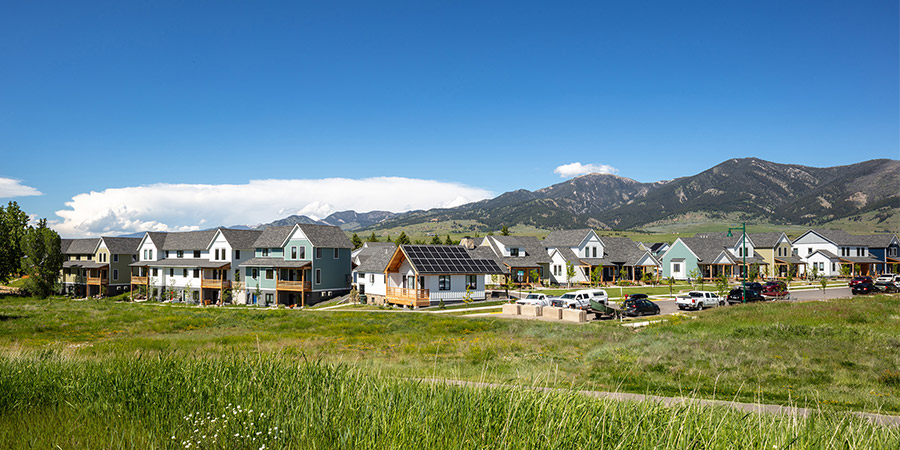
One notable thing about Neighbor David is that he lives in the five-unit condo building across the alley, the building I opposed ten years ago, despite its attractive design. For my first 25 years in my corner of historic northeast Bozeman I enjoyed a neighboring business’s large green lawn and gorgeous flowering crabapple tree. Now that was to be replaced by a towering building that had five units but only three small garages.
Intrusive infill construction in historic neighborhoods is being experienced by folks throughout Bozeman’s “inner city” center and with every new proposal, city officials are flooded with objections by longtime residents of the impacted neighborhoods. While most of us sympathize with the goal of keeping suburban sprawl from totally consuming our valley, the loss of sunlight for our gardens, increased traffic congestion on our once quiet streets, and especially inadequate parking provisions can ignite furious opposition.
But there’s another factor that’s not quite so obvious: Who are the people who will occupy the new abodes?
In the rare case where the developer plans “affordable” rental units, some opposition lands squarely in traditional NIMBY (not in my backyard) territory, with residents worrying that “the wrong kind of people” will be moving to their neighborhood. What is the wrong kind of people? For some of us in the inner city it’s people who can buy the ballyhooed “luxury units” and then use them as a Bozeman “pied a terre” while spending most of their time in their other homes. When a 12-unit townhouse complex that replaced two small, cheap rentals was first proposed across the alley from me and just down from Neighbor David’s condo, I told anyone who would listen that I would prefer a 24-unit apartment building (with sufficient parking) that would provide a home for restaurant servers and entry-level professionals who work downtown, folks who might send their children to the elementary school across the street from me, rather than people who would leave the buildings empty most of the time.
But when we fret about new construction ruining our neighborhoods we need to think what being neighbors means. Most of us in the Prime Magazine demographic are not up to shoveling our neighbor’s walks or – as some of my new neighbors did a few years ago — climbing up on a ladder to help get a silly cat off the roof she was meowing from so piteously.
But being a good neighbor isn’t just shoveling snow or looking out for each other’s kids or pets. Demonstrating an interest in and a commitment to our mutual community is part of good neighborship. When David showed up at my door with a petition he was circulating to get some sort of traffic calming accomplished on my corner, he was truly being a good neighbor.
When another resident of David’s condo complex presents entertaining stories at Pecha-Kucha it shows me she considers herself a part of my community, not just someone who’s found a nice place to live with easy access to nature’s wonders.
When I run into folks from the big townhouse complex at a Main Street rally I know that they care about the future of our mutual country as well as being kind to little old ladies and their cats.
And when I find out that those friendly folks who show up at so many OLLI classes and other events where I am actually live in the dreaded building that some of us protested before the city commission a few years ago – well, I have to eat a few crumbs of humble pie concerning my prejudices about kitchens with granite countertops.
Those of us in the Prime of our lives can continue to practice good neighborship by including civic involvement in our definition of being good neighbors. We can join our neighborhood associations, help run our homeowner governing bodies, or volunteer to serve on an advisory committee. Some of us could even run for office. All of us need to vote in all elections and keep ourselves informed on the issues involved so we vote intelligently.
Because we all want to live in nice neighborhoods, right? And be good neighbors.